What you are buying
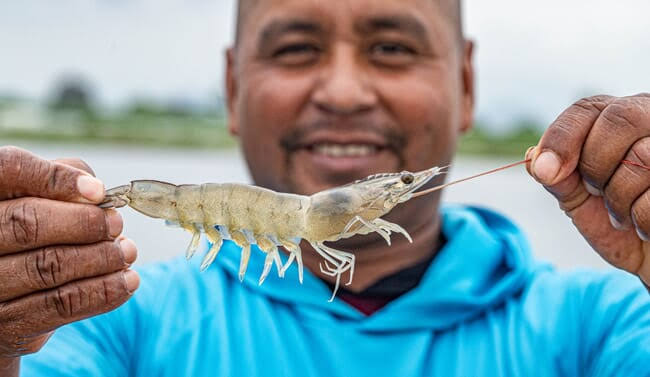
Ecuador farms white shrimp (Penaeus vannamei, also sold as Litopenaeus vannamei) on more than 230,000 hectares of ponds. Farms stock at low densities, typically 8 to 20 shrimp per square meter, which limits stress and disease. Buyers value the result for firm texture, clean flavor and strong head-on presentation.
Presentations and where they sell
- HOSO (head-on, shell-on): the main format for China, Spain, France and Italy.
- HLSO (headless, shell-on): widely used in the United States and Europe.
- EZ Peel (headless, shell split and deveined): popular in U.S. retail and foodservice.
- PUD (peeled, undeveined): used for further processing and value lines.
- P&D / PDTO (peeled and deveined, tail off or tail on): U.S. and EU foodservice and retail.
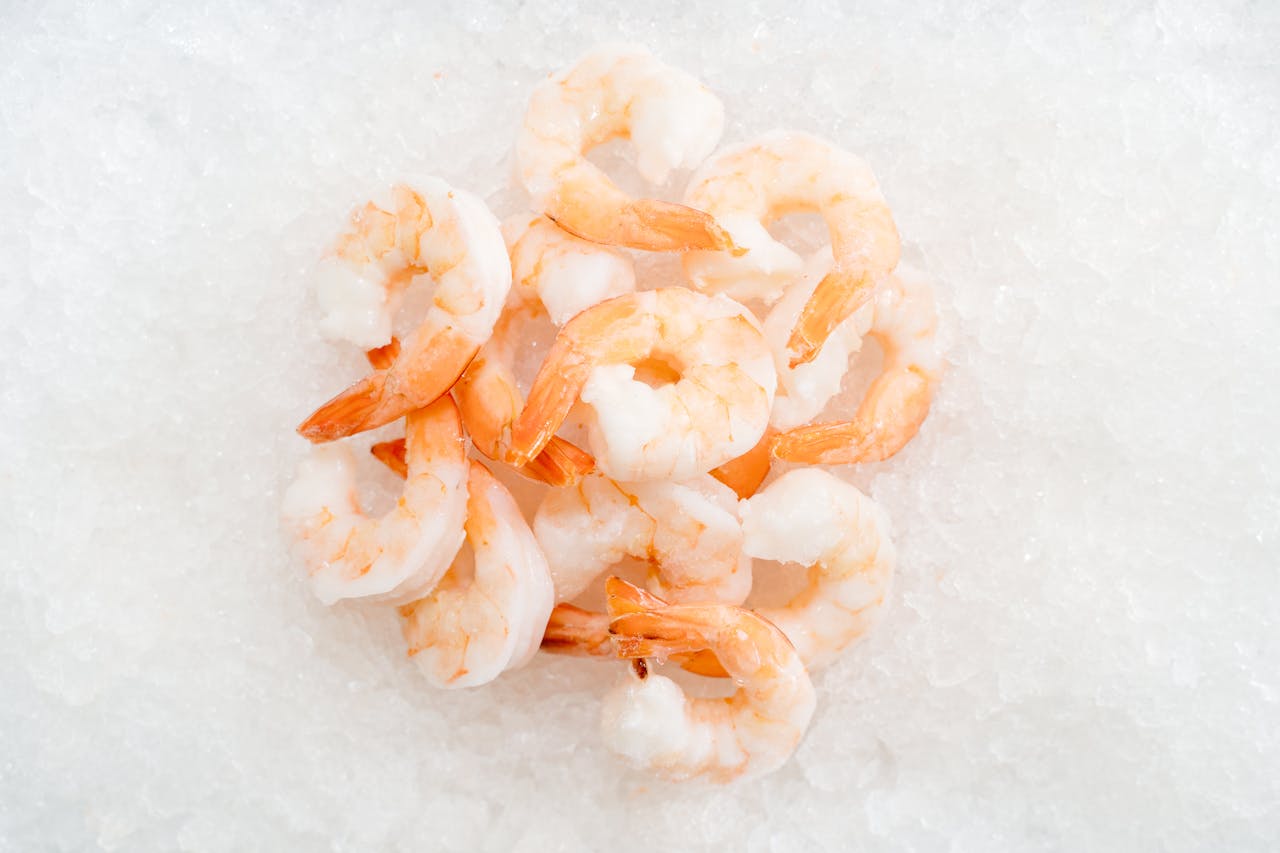
- Cooked (HOSO or peeled, cooked and frozen): strong in Southern Europe and retail shrimp rings.
Count sizes
HOSO is usually graded in pieces per kilogram (for example 20/30, 30/40, 40/50). HLSO and peeled shrimp are graded in pieces per pound (for example 16/20, 21/25, 26/30, 31/40). Always state the unit in the contract.
A count range alone is not enough. Ask for a uniformity ratio: the weight of the largest 10% of pieces divided by the smallest 10% in a sample. Agree a maximum in writing so a 21/25 box is not half 16/20 and half 26/30.
Glaze and net weight
Glaze is a thin ice coat that protects frozen shrimp from dehydration and freezer burn. Around 5–15% is technically needed; some products on the market carry far more.
In the EU, the declared net weight of glazed food must exclude the glaze (Regulation (EU) No 1169/2011, Annex IX), and health certificates follow the same rule. In the U.S., net weight on glazed seafood is also checked without the glaze. Write it plainly: "100% net weight, glaze excluded", and state the glaze percentage you accept.
Freezing and packing
- Block frozen: shrimp frozen in water inside a carton. Common for HOSO and reprocessing.
- IQF or semi-IQF: pieces frozen individually. Easier portioning; standard for peeled retail.
- Packing: specify inner pack weight, master carton configuration, labeling language and your private-label artwork.
Sulfites and additives
Sodium metabisulfite prevents blackspot (melanosis) in shrimp. Limits differ by market. The EU sets maximum sulfite levels for raw crustaceans that rise with shrimp size for Penaeidae, from 150 mg/kg, with lower limits for cooked crustaceans. In the U.S., sulfites must be declared on the label when present at 10 ppm or more.
If you use phosphates or other moisture-retention agents, state the allowed product and maximum level. If you buy a "no chemicals" program, put it in the contract and ask for lab reports per lot.
Quality defects to define
Agree the maximum percentage for each: blackspot, broken or damaged pieces, soft or loose shells, dehydration, and foreign matter. For cooked shrimp in Europe, also define the cooked color you expect, because color varies by farm and season.
The one-page spec sheet
- Species: Penaeus vannamei, farmed, Ecuador.
- Presentation: for example, HLSO.
- Count: for example, 21/25 pieces per lb, with a uniformity ratio agreed in writing.
- Freezing: for example, block frozen, 5 x 4 lb per master carton.
- Net weight: 100% net weight, glaze excluded; glaze 10% maximum.
- Additives: sodium metabisulfite within destination limits; phosphates allowed or not.
- Defects: maximum percentage for blackspot, broken pieces and soft shell.
- Certification: per your program, for example BAP or ASC.
- Documents: health certificate, certificate of origin and lab results per lot.
- Incoterm: for example, FOB Guayaquil or CFR destination port.
Ask us for a spec sheet
Cepromar exports farmed Ecuadorian white shrimp alongside its whitefish range. [Insert: Cepromar presentations, count sizes, packing formats and certifications.] Send us your spec, and our team will confirm what we can pack and when.
Sources: The Fish Site on Ecuador farming densities · European Commission FAQ on glazed seafood net weight · MARR on glaze levels · EU Market Advisory Council on sulfite limits in crustaceans